
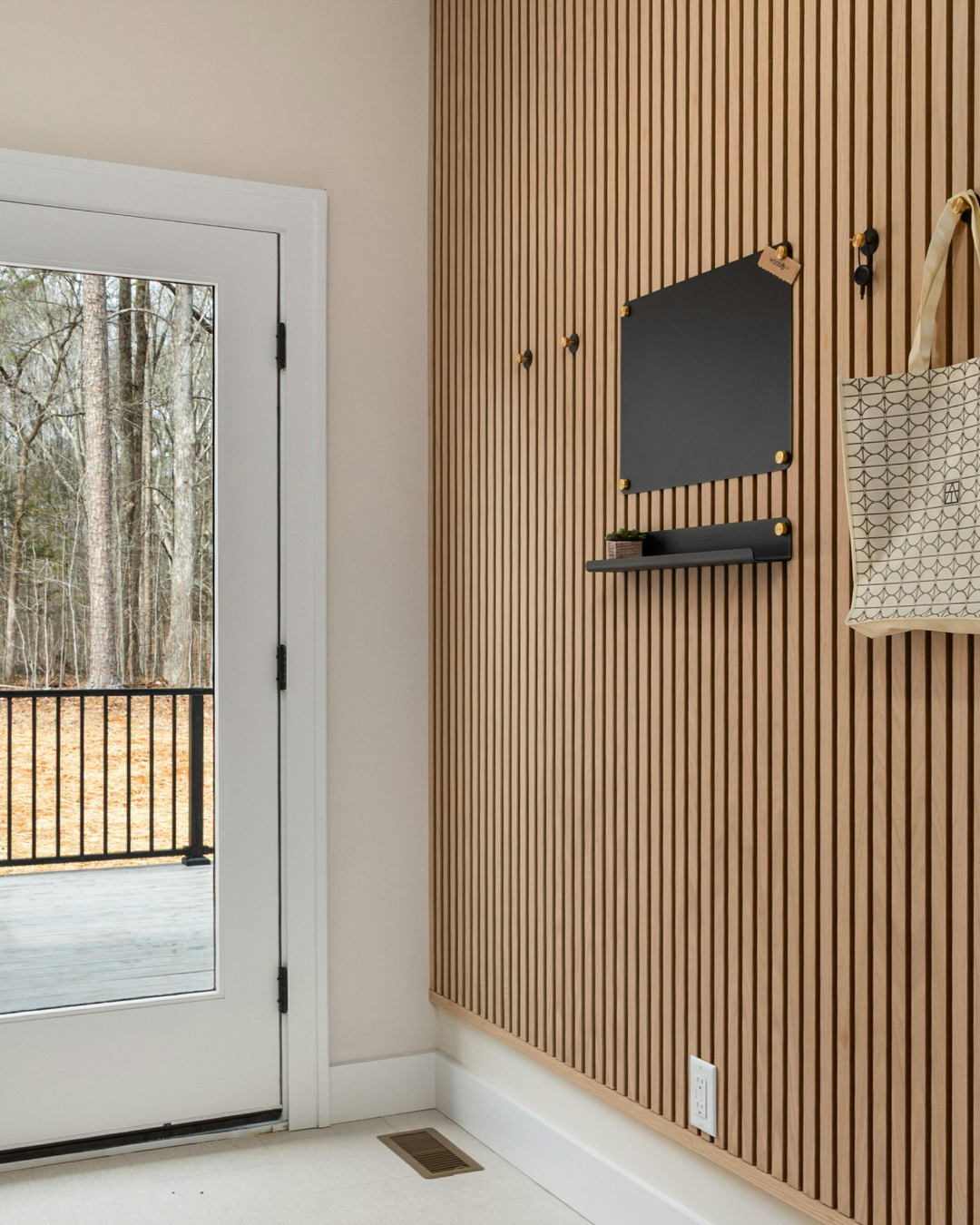
Wood paneling has officially shed its 1970s reputation. What was once associated with dark, claustrophobic basement rec rooms is now among the most sought-after interior design elements in contemporary homes, from coastal retreats with whitewashed shiplap to modern farmhouses with natural white oak accent walls to city apartments where a single paneled wall turns a rented bedroom into something that feels permanent and considered.
Tongue and groove wall panels and ceilings are at the center of this revival. Here's everything you need to know to use them well.
Why Wood Paneling Is Having a Moment
The short answer: we're spending more time at home, and the spaces we live in have had to work harder. Painted drywall gets the job done structurally, but it doesn't add texture, warmth, or any sense that a space was designed rather than assembled.
Wood paneling solves this. A single paneled wall does more for a room's character than almost any other single intervention, more than new furniture, more than artwork, more than changing the paint color. And tongue and groove paneling specifically has a clean, precise look that works in both rustic and contemporary contexts, depending on species, finish, and installation orientation.
The design shortcut that interior designers know: if a room feels empty and undefined, wood on one wall will fix it faster than anything else.
Wall Applications vs. Ceiling Applications: What Changes
Wall panels:
Wall installation is the most straightforward application. Tongue and groove wall panels can be installed directly to studs or over existing drywall using construction adhesive, finish nails, or both. The wall provides continuous support for the panels, and the tongue-and-groove joint locks each board to the next while allowing for seasonal wood movement.
Tongue and groove wood ceilings:
Ceiling applications use the same material but introduce a few additional considerations. Weight matters more; every board is fighting gravity, and the fastening system must be robust. Tongue and groove ceiling installations typically use blind nailing through the tongue of each board into ceiling joists or a strapping system. Ceiling-grade tongue and groove should be properly dried to minimize cupping and movement after installation.
The visual effect of a wood ceiling is extraordinary and underutilized in residential design. A paneled ceiling in a kitchen, dining room, or bedroom adds warmth from above, where the eye travels constantly, in a way that most design interventions simply don't reach.
Porch ceilings: traditionally painted in "haint blue," tongue and groove is the classic material
Kitchen ceilings: especially effective in kitchens with open shelving, where the ceiling becomes part of the visual composition
Bedroom ceilings: create a cocoon-like warmth; works particularly well with exposed beams
Sloped ceilings and dormers: tongue and groove follows the angle cleanly, defining the architecture
Species and Finish Options for Panels
White Oak:
The most popular choice for contemporary paneling. White oak's tight grain and relatively neutral undertone read as both modern and timeless. It can be left clear-finished to show the natural wood, whitewashed for a Scandinavian look, or stained in any direction. White oak tongue and groove paneling installed horizontally in a living room or vertically in a hallway creates an immediate design statement.
Knotty species (pine, Douglas fir, cedar):
For rustic, cabin, or farmhouse aesthetics, knotty species add natural character and are typically more affordable. Cedar is also a natural choice for closets and utility spaces due to its aromatic and pest-repellent qualities.
Finish options:
Clear natural oil or hard wax oil: preserves the natural wood color, enhances grain
Whitewash or lime wash: opens the grain and lightens the wood for a Nordic or coastal look
Painted: tongue and groove takes paint beautifully, a classic white paneled wall is timeless
Stained: dark-stained oak paneling creates a dramatic contrast with light walls and ceilings
Horizontal vs. Vertical vs. Diagonal Installations
Installation orientation is a design decision as important as species selection.
Horizontal installation:
Emphasizes the length of a room; makes spaces feel wider and more relaxed
Classic for living rooms, bedrooms, and any space where you want a laid-back, organic feel
Works naturally with the visual flow of flooring
Vertical installation:
Draws the eye upward; makes rooms feel taller
More formal and traditional, the classic look for wainscoting and entry halls
Creates a strong rhythm that suits narrow rooms and hallways
Diagonal installation:
High visual impact; creates dynamic energy in a space
Best used as an accent wall rather than a full-room treatment
Requires more planning and waste allowance, but delivers a distinctive result
DIY-Friendly Tips
Tongue and groove wall paneling is one of the more approachable DIY projects for a confident homeowner. Here's what to know:
Acclimation is essential.
Bring your panels into the room at least 3–5 days before installation. Wood acclimates to the moisture content of its environment, and panels installed before they've adjusted will move after installation, sometimes dramatically.
Two fastening methods work well:
Blind nailing through the tongue: the nail is hidden by the next board's groove, producing a clean face with no visible fasteners
Face nailing with finish nails and a nail set: appropriate for thicker paneling or when structural contact with studs is needed
Leave expansion gaps.
Leave at least 1/4" gap at the floor and ceiling (covered by trim) to allow for seasonal movement. Without this gap, panels installed tight to boundaries will buckle in humid seasons.
Mark your studs before you start.
Every 2–3 boards should hit a stud for structural security, especially on walls that may experience impact (hallways, mudrooms). Transfer stud locations to the top and bottom plates before the panels cover your marks.
Accent Wall vs. Full-Room: Cost and Impact
This is the question most homeowners face. Here's a practical comparison:
Single accent wall:
Lower material cost, typically 1/4 to 1/3 of a full-room treatment
Highest impact-per-dollar, one statement wall defines a room
The right choice when the rest of the room has strong design elements competing for attention
Best walls for accent treatment: the wall behind a bed (bedroom), the fireplace wall (living room), the wall behind a dining table
Full-room treatment:
Creates an immersive, cocoon-like environment, a completely different spatial experience
Most effective in smaller spaces: studies, reading rooms, powder rooms
Requires careful finish selection, very dark wood all around can feel heavy; lighter species or painted paneling keeps the room feeling open
A full-room wood ceiling in a kitchen or dining room is one of the most impactful design moves available at the price point, more so than countertops, backsplashes, or lighting, and it's consistently underused.
Tongue & Groove Paneling at Tongue & Groove
Our tongue and groove wall panels and ceiling boards are available in white oak and other species, in a range of widths and profiles. Whether you're doing a single accent wall in a bedroom, paneling an entire study, or finishing a porch or cathedral ceiling, we can help you spec the right material for the application.
Our team is familiar with both DIY and contractor-led installations and can advise on quantities, fastening systems, and finish compatibility.

